Vancomycin Purification Case Study
Introduction
Vancomycin, as the first glycopeptide antibacterial drug, is used to prevent and treat infections caused by Gram-positive bacteria. Its mechanism of action involves binding with high affinity to the terminal D-alanyl-D-alanine of the peptidoglycan precursor in the cell wall of susceptible bacteria, thereby blocking the synthesis of high-molecular-weight peptidoglycan that constitutes the bacterial cell wall, leading to cell wall defects and bacterial death. It is a first-line treatment for MRSA/MRCNS (methicillin-resistant Staphylococcus aureus/methicillin-resistant coagulase-negative staphylococci) infections and is known as the "trump card antibiotic" and the "last line of defense" against drug-resistant bacteria. It exhibits potent activity against Staphylococcus aureus, Streptococcus pyogenes, Streptococcus pneumoniae, and is also effective against Clostridium difficile, Bacillus anthracis, and Corynebacterium diphtheriae. It shows no cross-resistance with other antibiotics, and resistant strains are rare.
Vancomycin hydrochloride was first developed by Eli Lilly and received FDA approval in 1958. It was initially isolated from soil samples collected in Indonesia, from which Amycolatopsis orientalis, a microorganism capable of producing the antibacterial compound, was cultured and isolated. After purification, this compound effectively killed MRSA.
In China, North China Pharmaceutical successfully developed norvancomycin in 1968 and launched it in the domestic market, with an antibacterial spectrum comparable to vancomycin hydrochloride. Currently, vancomycin injections from Eli Lilly, Taiwan Cheng De Pharmaceutical, Zhejiang Hisun, Zhejiang Medicine, Livzon and other pharmaceutical companies have been approved in China. Based on historical sales data, generic vancomycin manufacturers will gradually capture market share, necessitating continuous improvements in cost efficiency and product competitiveness.
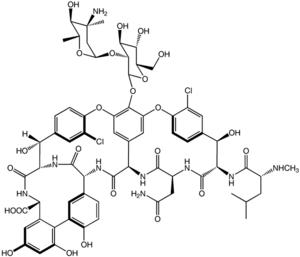
Figure 1. Vancomycin structural formula
Vancomycin, as the first glycopeptide antibiotic, is a bactericidal agent with a triple mechanism of action. Vancomycin is primarily used to treat infections in four areas: (1) treatment of drug-resistant bacterial infections; (2) treatment of antibiotic-associated pseudomembranous colitis caused by Clostridium difficile; (3) treatment of colitis and intestinal inflammation; (4) prophylaxis of infections during procedures such as cardiac catheter or venous catheter placement. Vancomycin can be used as monotherapy or in combination therapy.
Vancomycin Purification Challenges
With growing awareness of drug safety, the pharmaceutical industry demands increasingly higher purity of vancomycin. In the current market landscape, major pharmaceutical companies are enhancing their core competitiveness by reducing production costs and improving product efficiency. In the face of industry competition, improving product quality while reducing costs is particularly critical.
Purification Results
The customer initially used a reversed-phase polymer resin purification process. However, as drug quality requirements became more stringent, purity specifications and limits on individual impurities became increasingly strict. This necessitated a change in resin and purification process to improve sample quality. Based on the customer’s requirements, NanoMicro leveraged its years of accumulated expertise in chromatography resin development and process development to successfully develop an ion-exchange purification process suitable for vancomycin separation and purification. The process features are as follows:
1. Purity reached 95.6%, improved compared to the original process, with excellent control of front and back impurities and superior separation performance;
2. Binding capacity reached 30 mg/mL, improved compared to the original process;
3. Isocratic elution is employed, simplifying the process and reducing equipment requirements;
4. The mobile phase uses non-polluting buffer salt solutions, which are non-toxic and safe.
Conclusion
In summary, to address the challenges of vancomycin separation and purification, NanoMicro developed a chromatography purification process based on Uni®MSP-50XS ion-exchange resin. Through repeated validation, the process is stable, achieving a yield of 80%, and meets all requirements for high binding capacity, high purity, and low cost in production. It has now been successfully scaled up for industrial production.
Ordering Information
Product Name | Pack Size | Stock Code |
Uni®MSP-50XS | 30 mL | 04012-050030-2030 |
100 mL | 04012-050030-2100 | |
1 L | 04012-050030-1001 | |
10 L | 04012-050030-1010 | |
100 L | 04012-050030-1100 |
*This table shows only a selection of NanoMicro product pack sizes. Please contact us for other requirements.