Tacrolimus Purification Application Case
Introduction
Tacrolimus, also known as FK506, is a 23-membered macrolide antibiotic isolated from the fermentation broth of Streptomyces tsukubaensis No.9993 by Fujisawa Pharmaceutical Co., Ltd. in Japan. It is a potent new immunosuppressant with weak antifungal activity. By inhibiting the release of interleukin-2 (IL-2), it comprehensively suppresses T lymphocyte function, and is 100 times more potent than cyclosporine (CsA). In recent years, it has been launched in 14 countries including Japan and the United States as a first-line drug for liver and kidney transplantation. Clinical trials have demonstrated excellent efficacy in heart, lung, intestinal, and bone marrow transplantation. It is now widely used in nephrology for the treatment of nephrotic syndrome (both primary and secondary). Due to its strong efficacy and fewer adverse reactions, it has become the immunosuppressant of choice. FK506 also plays an active role in treating autoimmune diseases such as atopic dermatitis (AD), systemic lupus erythematosus (SLE), and autoimmune eye diseases.
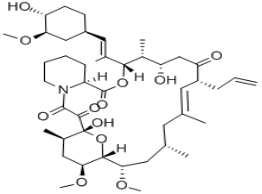
Figure 1. Chemical structure of tacrolimus
Challenges in Tacrolimus Purification
Tacrolimus is derived from fermentation, during which multiple tacrolimus analogues are also produced, including dihydrotacrolimus and ascomycin impurities, as shown in Figure 2. These impurities are structurally very similar to tacrolimus with comparable physicochemical properties, making it difficult to obtain high-purity API through conventional purification techniques, thus failing to meet pharmaceutical production requirements. This case had no existing process background, requiring complete process development. Additionally, the dihydrotacrolimus content was high, and the unknown impurity B content needed to be reduced to below 0.05%, presenting significant challenges in process development.
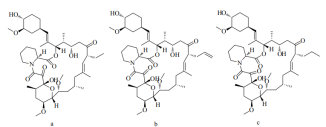
Figure 2. Chemical structures of ascomycin (a), tacrolimus (b), and dihydrotacrolimus (c)
Process Summary
Due to the tightened quality standards for tacrolimus, the original process could no longer meet market purity requirements, necessitating the development of a new process to improve product quality. The new process required reducing unknown impurity B to below 0.05%, dihydrotacrolimus to below 1%, while achieving a recovery rate of ≥85% and a loading capacity of ≥20 mg/mL.
Based on these requirements and the challenges of tacrolimus purification, NanoMicro successfully developed a reverse-phase chromatography purification process suitable for tacrolimus separation and preparation through extensive development and repeated experimental validation. This process utilizes UniSil®10-120 C18 monodisperse silica media with 35% isopropanol isocratic elution, successfully reducing dihydrotacrolimus to below 1% and completely removing unknown impurity B, while increasing loading capacity to 25 mg/mL and recovery to above 90%, fully meeting technical requirements. This process features excellent separation efficiency, superior single-impurity control, and process stability, and has been successfully scaled up for industrial production.
Note: For the full version, please contact us.
Product Name | Packaging Specification | Stock Code |
UniSil®10-120 C18 | 100 g | 19001-100012-4100 |
500 g | 19001-100012-4500 | |
1 Kg | 19001-100012-3001 | |
10 Kg | 19001-100012-3010 | |
20 Kg | 19001-100012-3020 |
*This table only shows a portion of NanoMicro's reversed-phase silica media. For other media requirements, please contact us.