Purification Case Study of Sugammadex Sodium
Introduction
Sugammadex Sodium, marketed under the brand name Bridion, was developed by Merck Sharp & Dohme and Organon. It represents the first major drug discovery in the field of anesthetics in nearly two decades, used to reverse the neuromuscular blockade induced by the routinely used neuromuscular blocking agents rocuronium and vecuronium. After postoperative injection, sugammadex sodium selectively and with high affinity encapsulates rocuronium, forming an inactive complex that is excreted via the kidneys, thereby reducing plasma levels of rocuronium and reversing neuromuscular blockade with favorable clinical outcomes. Sugammadex sodium is the world's first and only specific binding neuromuscular blocking reversal agent.
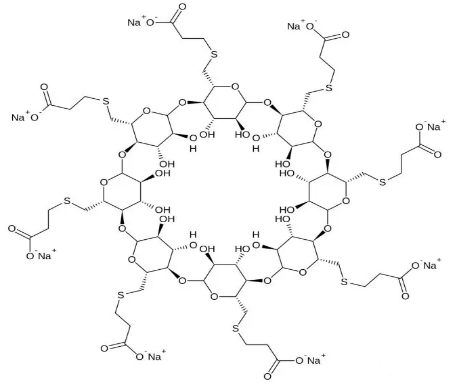
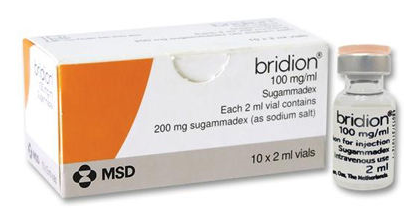
Figure 1. Sugammadex Sodium
Sugammadex sodium was first approved in Europe in July 2008, followed by approvals in Japan and the United States in 2010 and 2015, respectively. In April 2017, it received approval from the China National Medical Products Administration. Currently, the drug is marketed in numerous countries worldwide.
Challenges in Sugammadex Sodium Purification
Sugammadex sodium is a synthetic γ-cyclodextrin derivative that is readily soluble in water but insoluble in organic solvents. Its raw material is derived from polysaccharides, and the synthesis process is complex, particularly the production of iodo-γ-cyclodextrin intermediates, which requires extremely demanding process conditions. During manufacturing, numerous by-products and degradation impurities are generated, and the compound is highly susceptible to oxidation, forming sulfoxide and sulfone impurities. These impurities share structural similarity with the target molecule, making their removal by conventional methods difficult and rendering the purification process highly challenging. Therefore, the downstream purification process must exhibit excellent selectivity and resolution.
To address these purification challenges, NanoMicro has developed the UniDEAE-30S ion-exchange chromatography purification process, which ensures high loading capacity and high purity, making it suitable for industrial-scale production.
Purification Results
The customer, facing relatively low loading capacity with their existing reversed-phase purification process, requested the development of a new process that would increase loading capacity while achieving purity >98%.
In response to the customer's requirements, NanoMicro successfully developed a purification process tailored for sugammadex sodium. Key features include:
1. Loading capacity up to 40 mg/mL, significantly improved compared to the original process.
2. Purity increased from 95% to 99%, with a yield of 82.23%.
3. The mobile phase utilizes conventional, non-hazardous buffer salt solutions, eliminating the use of toxic reagents and ensuring high safety.
Conclusion
The UniDEAE-30S weak anion-exchange chromatography purification process has been validated through repeated experiments, yielding a robust and reproducible process that meets customer requirements and is amenable to industrial scale-up.
Note: For the full version, please contact us.
Ordering Information
| Product Name | Package Size | Catalog # |
|---|---|---|
| UniDEAE®-30S | 30 mL | 04023-030050-2030 |
| 100 mL | 04023-030050-2100 | |
| 1 L | 04023-030050-1001 | |
| 10 L | 04023-030050-1010 | |
| 100 L | 04023-030050-1100 |
*This table shows only a selection of NanoMicro's weak anion-exchange resins. For other resin requirements, please contact us.