Prostaglandin E2 Purification Application Case
Introduction
Prostaglandins (PG) are a class of physiologically active unsaturated fatty acids, known as eicosanoids, widely present in mammals, marine coelenterates, and certain higher plants, playing important physiological regulatory functions. After binding to specific receptors, prostaglandins play key roles in mediating a series of cellular activities such as cell proliferation, differentiation, and apoptosis, as well as regulating female reproductive function and childbirth, platelet aggregation, and cardiovascular system balance. They were first discovered by Swedish scientist von Euler and colleagues in the 1930s. Subsequently, in 1960, Swedish biochemist Bergstrom first isolated and crystallized prostaglandin substances—PGF1α and PGE1—from sheep prostate glands, and confirmed their structures in 1962. Because they were first discovered in human semen, it was initially speculated that prostaglandins were released into semen by the prostate gland, hence the name prostaglandin. In fact, prostate fluid contains relatively little prostaglandin activity. They can now be prepared by biosynthesis or total synthesis and are used clinically as drugs.
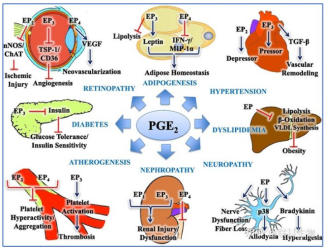
Figure 1. PGE2 participates in various physiological and pathological processes
The basic structure of prostaglandins is an unsaturated fatty acid containing a five-membered ring with two side chains in trans configuration. There are many classifications of prostaglandins; one is based on the different double bond positions and substituents on the five-carbon ring structure, divided into nine types: A, B, C, D, E, F, G, H, and I, denoted as PGA, PGB, PGC, etc. Each type has different subunit groups and exhibits a wide range of biological effects.
Among them, prostaglandin E2 (PGE2) is an important member of the prostaglandin family and the most abundant prostaglandin in the human body. It is a major metabolite produced by cyclooxygenase (COX) catalyzing arachidonic acid. PGE2 mediates various physiological functions through its four receptor subtypes (EP1, EP2, EP3, and EP4). It can induce vasodilation or vasoconstriction and is particularly important in embryo implantation, renal hemodynamic regulation, blood pressure control, childbirth, and gastrointestinal motility. PGE2 has been proven to be a key regulator of body temperature, sleep-wake mechanisms, gastrointestinal secretion, and mucosal barrier function. The prostaglandins widely used clinically include PGF2α, PGF1α, PGE1, PGE2, cloprostenol, and fluprostenol.
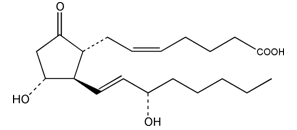
Figure 2. PGE2 structural formula
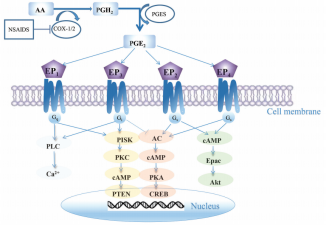
Figure 3. EP1~EP4 signaling pathway diagram
Challenges in Prostaglandin E2 Separation and Purification
During the biosynthesis of PGE2, the final product is often accompanied by PGF2α, PGA2, and endogenous PGE1, among others. In downstream purification, some critical impurities are structurally similar to the target product and are difficult to remove, complicating the purification process. Moreover, for larger-scale preparation, efficient and easy-to-operate methods for separating and purifying PGE2 from PGE1 are still lacking.
To address these challenges, NanoMicro has developed a high-yield purification process for PGE2. This process employs monodisperse UniSil® C18 as the stationary phase, offering a simple separation method with a recovery rate of up to 99% and purity exceeding 98%, and is scalable for production.
Purification Results
Based on the challenges in PGE2 separation and purification, NanoMicro has specifically developed a monodisperse reversed-phase silica purification process, which is highly suitable for PGE2 separation and purification. This process uses monodisperse UniSil® C18 as the stationary phase with isocratic elution. The separation method is simple, achieving a final recovery rate of up to 99% and product purity exceeding 98%, with a purification cycle of 2 hours. The process is stable and reproducible, and has been successfully scaled up for production.
Note: For complete information, please contact us.
Ordering Information
Product Name | Package Size | Catalog # |
UniSil®10-120 C18 | 100 g | 19001-100012-4100 |
500 g | 19001-100012-4500 | |
1 Kg | 19001-100012-3001 | |
10 Kg | 19001-100012-3010 | |
20 Kg | 19001-100012-3020 |
*This table shows only a portion of NanoMicro's package sizes. For other requirements, please contact us.