Case Study | Outstanding Performance of NanoQ Series Ion Exchange Resins in ASO and siRNA Oligonucleotide Purification
Outstanding Performance of NanoQ Series Ion Exchange Resins in ASO and siRNA Oligonucleotide Purification-Suzhou NanoMicro Technology Co., Ltd.
Oligonucleotides — short DNA or RNA fragments composed of several to dozens of nucleotide monomers — are core tools in modern molecular biology research. As critical reagent raw materials, they play an irreplaceable role in basic research, molecular diagnostics, and drug development.
More importantly, oligonucleotide drugs act at the post-transcriptional level, targeting previously undruggable protein targets. With the potential to treat "undruggable" diseases, they are poised to lead the third wave of modern therapeutics after antibody drugs.
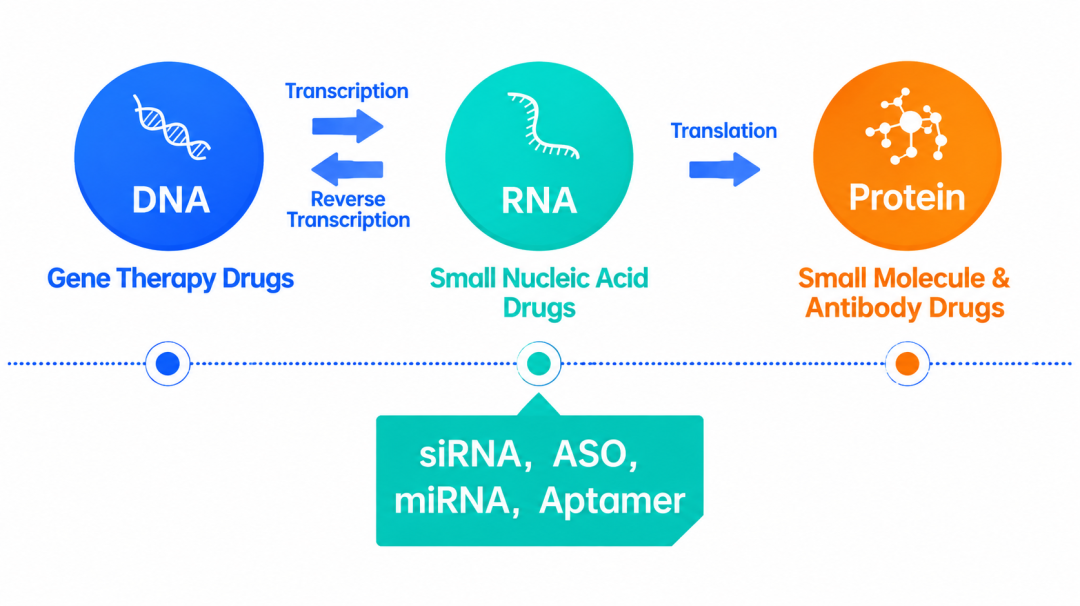
Figure1. From Genetic Information Transfer to Innovative Drugs
The production of oligonucleotides (e.g., siRNA, ASO) relies primarily on solid-phase chemical synthesis — fundamentally different from traditional biologics like antibodies that depend on cell culture. The core process comprises three stages: synthesis, purification, and quality control. These short nucleotide chains exert their function entirely through extremely high purity — purification is the "lifeline" that safeguards the value of oligonucleotides.
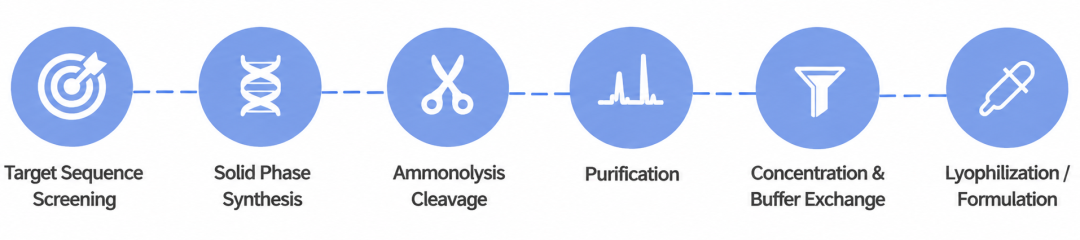
Figure 2. Oligonucleotide Drug Production Process
Oligonucleotide Purification Process
Oligonucleotide synthesis is a complex process, not a single-step reaction. Although monomer coupling efficiency in solid-phase synthesis is high, the crude product after deprotection and cleavage still contains various impurities, such as N-X and N+X oligomers, modification by-products, and incomplete oxidation/deprotection/capping products. These impurities significantly impact drug quality and may even seriously threaten clinical reliability.
Some impurities (e.g., length variants, base mutations, and thioation modifications) are physicochemically similar, requiring high-resolution purification — typically achieved with small particle size, high-efficiency media to enhance critical impurity removal. Moreover, as the variety of oligonucleotide raw materials, nucleotide monomers, and post-synthetic modifications grows, purification challenges become increasingly demanding.
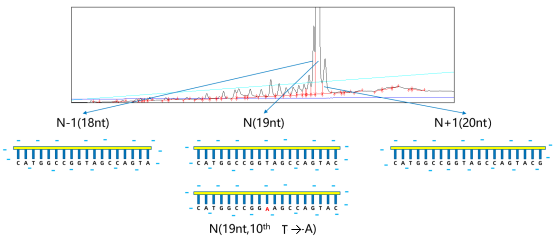
Figure 3. Key Impurity Sequences in Oligonucleotides
Therefore, in post-solid-phase synthesis purification, selecting the right media and purification process is critical for product quality and production efficiency. In practice, oligonucleotide purification often combines multiple chromatography techniques to achieve optimal separation. Current mainstream methods include anion-exchange chromatography, reversed-phase chromatography, and hydrophobic interaction chromatography. Depending on the process, one or two of these methods may be selected.
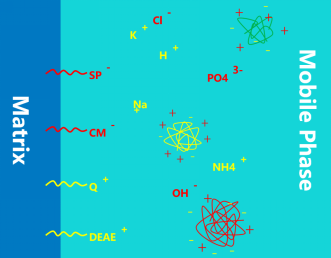
Figure4. Ion-Exchange Chromatography
Ion-exchange chromatography exploits the negative charge of oligonucleotide phosphate groups. Charged ligands on the stationary phase bind via electrostatic adsorption, and target molecules are separated from impurities by adjusting ionic strength. High-capacity ion-exchange media effectively reduce purification cost per unit product, providing critical support for large-scale oligonucleotide drug production.Through electrostatic adsorption binding, followed by ionic strength adjustment to separate target molecules from impurities. High-capacity ion-exchange media effectively reduce purification cost per unit product, providing critical support for large-scale oligonucleotide drug production.
Recommended NanoQ Series Media
NanoMicro's NanoQ series strong anion-exchange media deliver exceptional performance. Built on a mechanically robust PS/DVB matrix with surface hydrophilic modification and bonded ion-exchange groups, they combine excellent biocompatibility with stable physicochemical properties, significantly enhancing separation and purification efficiency.NanoQ series media are available in 10μm, 15μm, and 30μm particle sizes, and are compatible with high-pressure DAC packing. Among these, the high-resolution NanoQ-15L and NanoQ-30L are particularly well-suited for oligonucleotide purification, making them the ideal choice for downstream oligonucleotide purification.. choice.
| Product | NanoQ-15L | NanoQ-30L |
| Matrix | PS/DVB | PS/DVB |
| Particle Size | 15 μm | 30 μm |
| Functional Group | Quaternary ammonium | Quaternary ammonium |
| Ligand Density | 0.27 mmol/mL | 0.21 mmol/mL |
| Dynamic Binding Capacity | ~55 mg/mL | ~45 mg/mL |
| Recommended Flow Rate | 150–800 cm/h | 250–1000 cm/h |
| Pressure Tolerance | 6 MPa | 2 MPa |
| Working pH Range | 2~12 | 2~12 |
| Regeneration pH Range | 1~14 | 1~14 |
| Cleaning-in-Place (CIP) | 0.5 M NaOH | 0.5 M NaOH |
| Operating Temperature | 4~30 °C | 4~30 °C |
| Storage Conditions | 20% ethanol, 4~25 °C | 20% ethanol, 4~25 °C |
| Key Features | High strength, high resolution, high pressure tolerance, acid & alkali resistance | High strength, high resolution, high pressure tolerance, acid & alkali resistance |
| Typical Applications | Oligonucleotides, polypeptides | Oligonucleotides, polypeptides |
Table1. NanoQ Series Media Specifications
Case Studies
Case1: Purification of DMT-off Antisense Oligonucleotides with NanoQ-15L
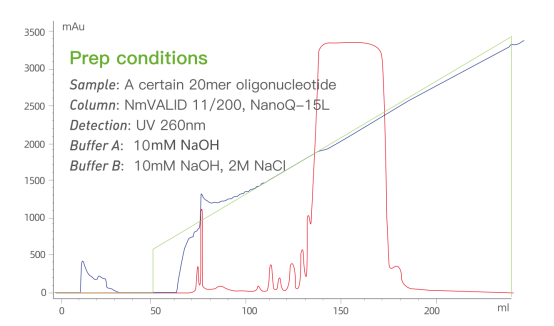
Figure5. NanoQ-15L PurificationChromatogram of 20mer Oligonucleotide Preparation
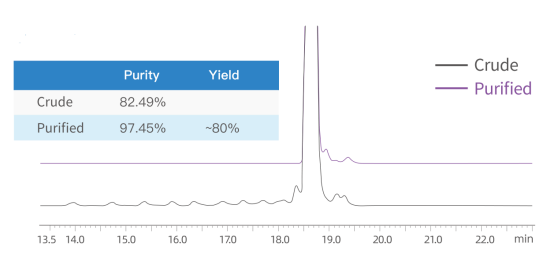
Figure6. HPLC Comparison Before and After NanoQ-15L Purification
Purification Results:
In the purification of a 20mer oligonucleotide, NanoQ-15L was used for preparative-scale purification. HPLC analysis of the crude product showed a main peak purity of only 82.49% (Figure 6, black), with major impurities being N-1 shortmers and residual DMT protecting groups. After optimized linear gradient elution, the purified main peak purity was significantly improved to 97.45% (Figure 6, purple), with critical impurity control achieving: N-1<1.5%, DMT<0.3%. Process yield was approximately 80% (by A260 quantification), meeting the cGMP requirement of >70%.
Case2: Purification of DMT-on Antisense Oligonucleotides with NanoQ-30L
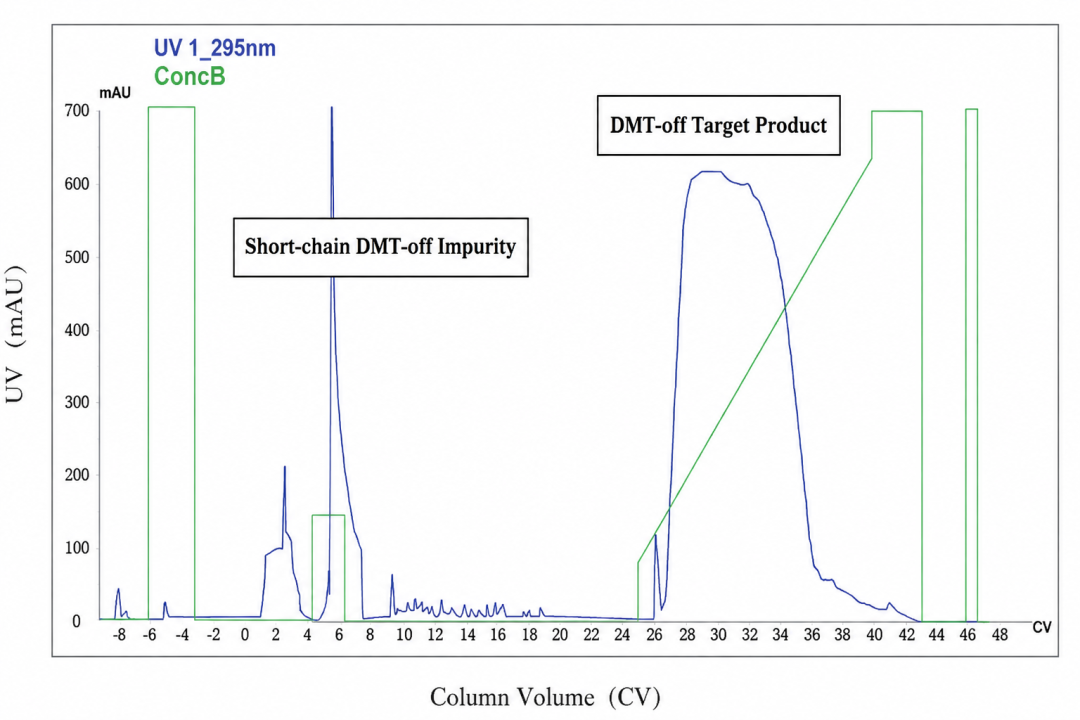
Figure7. Chromatogram of 20mer Oligonucleotide Purification with NanoQ-30L
Purification Results:
The results show that after loading, short-chain DMT-off impurities were effectively removed by washing with a low-salt buffer. An on-column deprotection reaction was then performed, followed by a second wash to remove cleaved protecting groups. The DMT-off target product was then eluted with a salt gradient, achieving a yield of >85%.
Case3: Purification of Oligonucleotides with NanoQ-30L
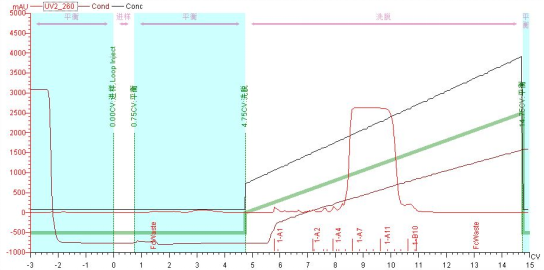
Figure8. Chromatogram of Oligonucleotide Purification with NanoQ-30L
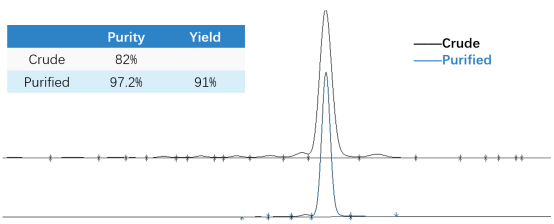
Figure 9. HPLC Comparison Before and After NanoQ-30L Purification
Purification Results:
UsingNanoQ-30L for oligonucleotide purification, samples before and after purification were analyzed by HPLC. The results showed a crude purity of approximately 82% (Figure 9black), containing process-related impurities and fragment isomers. After purification, sample purity was dramatically improved, ultimately reaching 97.2%(Figure 9blue), with critical impurities effectively removed, meeting QC standards. Meanwhile, yield was maintained at 90% or above, achieving a balance between purity and yield.
NanoMicro Integrated Oligonucleotide Production Solutions
Addressing the challenges in oligonucleotide R&D and production, the NanoMicro Group offers end-to-end integrated solutions: from high-performance solid-phase synthesis carriers and Sepure oligonucleotide synthesizers (ensuring efficient synthesis), to chromatography purification resins and Sepure chromatography systems for precise separation and purification, and finally NanoChrom analytical columns and Fuli chromatography systems for accurate analysis and QC. We help customers accelerate their R&D and production processes.
Please contact us to request the detailed integrated solution PDF.