

Organic Solvent-resistant Membranes
This series of organic solvent-resistant membranes is a high-performance solution developed for separation and purification in organic solvent systems across pharmaceutical, chemical, and materials industries. Featuring highly cross-linked specialty polymers and adhesive-free encapsulation technology, our products deliver exceptional chemical stability, high flux, and high retention across a wide range of polar to non-polar solvents. They enable critical processes such as solvent purification, API (active pharmaceutical ingredient) concentration, desalting, impurity removal, and solvent exchange.
Product Description
1. Product Overview
This series of organic solvent-resistant membranes is a high-performance solution developed for separation and purification in organic solvent systems across pharmaceutical, chemical, and materials industries. Featuring highly cross-linked specialty polymers and adhesive-free encapsulation technology, our products deliver exceptional chemical stability, high flux, and high retention across a wide range of polar to non-polar solvents. They enable critical processes such as solvent purification, API (active pharmaceutical ingredient) concentration, desalting, impurity removal, and solvent exchange.
2. Product Series & Technical Features
Exceptional solvent resistance: proprietary membrane materials operate stably in a wide range of organic solvents over extended periods
High flux and high retention: optimized membrane structure balances efficiency and precision
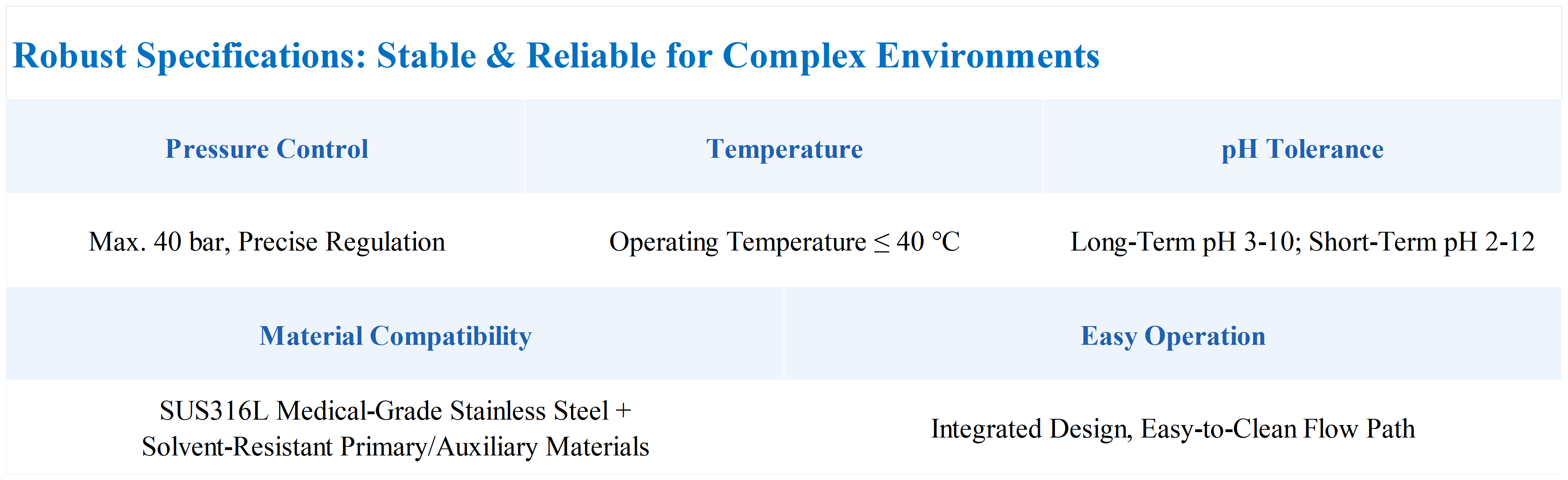
Zero extractables risk: all solvent-resistant materials and adhesive-free encapsulation design ensure product purity
Wide operating window: compatible with process conditions of 5-50 bar pressure, 5-40°C temperature, and pH 2-10
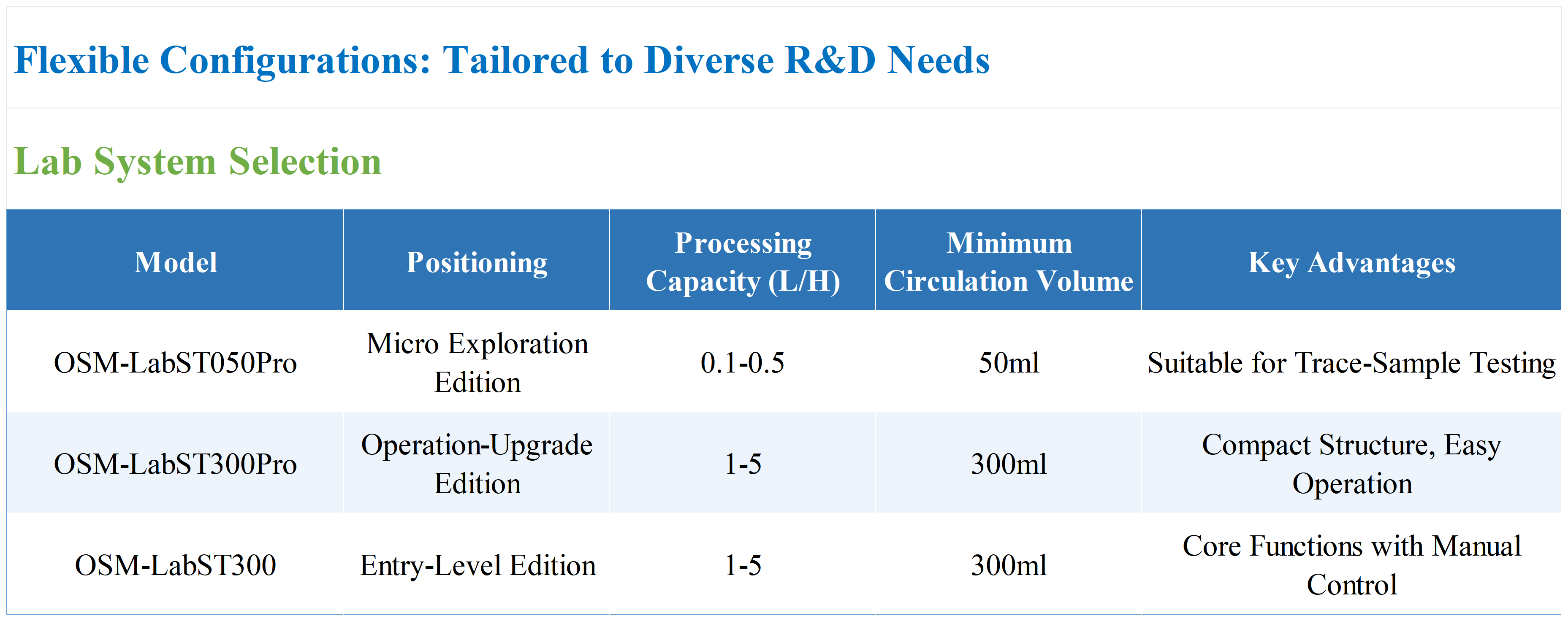
Flexible scale configurations: available in membrane areas from 1 to 10 m², meeting needs from lab-scale to production
3. Series Selection Guide
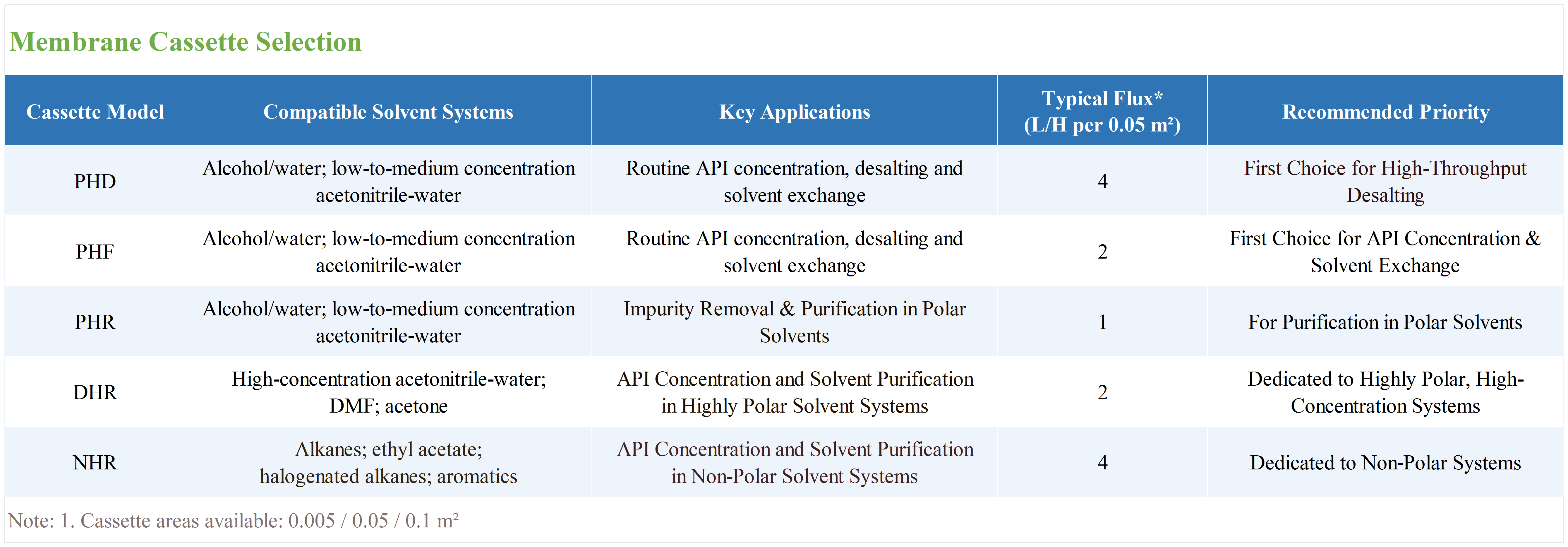
Our product line is carefully categorized by solvent polarity to ensure the right membrane for the right application, providing you with the optimal solution.
Series | Key Models | Applicable Solvent Systems | MWCO | Key Applications | Typical Flux Characteristics |
Polar Solvent Series | PHR | Methanol, ethanol, low-to-medium concentration acetonitrile-water, etc. | ~120 | Deep purification of small-molecule impurities, solvent refining | Stable flux, high retention precision |
PHF | Methanol, ethanol, low-to-medium concentration acetonitrile-water, etc. | ~200 | The first choice for API concentration, desalting, and solvent exchange | Balanced flux and retention performance | |
PHD | Alcohol/water, low-to-medium concentration acetonitrile-water | ~400 | Routine API concentration and desalting | High flux, prioritizing processing efficiency | |
DHR | High-concentration acetonitrile-water, DMF, DMSO | ~200 | Specialized concentration and purification for strong polar solvents | Optimized for strong polar solvents | |
Non-polar Solvent Series | NHR | Hexane, toluene, ethyl acetate, dichloroethane, etc. | ~300 | Concentration, impurity removal, and solvent recovery in non-polar systems | Excellent flux performance in non-polar solvents |
Note: 1. Membrane cassette areas available: 0.005/0.05/0.1 m²; 2. Flux values are measured under standard conditions; actual values may vary slightly
4. Detailed Performance & Specifications
1. Polar Solvent Series (PHR/PHF/PHD/DHR)
Typical single-pass retention performance of PHR series modules is shown below:

Typical single-pass retention performance of PHF series modules is shown below:

2. Non-polar Solvent Series (NHR - N Series)
Typical retention performance of N series membrane products is shown below:

5. How to Select the Right Product?
To simplify your selection process, follow this path:
1. Determine solvent properties:
- Polar solvents (alcohols, acetonitrile-water, DMF/DMSO) → Select the Polar Solvent Series
- Non-polar solvents (alkanes, aromatic hydrocarbons, esters, halogenated hydrocarbons) → Select NHR (N Series)
2. Define process objectives:
- Concentration/desalting/buffer exchange → Prioritize PHF (polar) or NHR (non-polar)
- Deep impurity removal/purification → Prioritize PHR (small molecule retention) or the corresponding series
- Maximize processing speed → Consider the higher-flux PHD model
3. Contact us for verification:
Given the complexity of real-world feed streams, we strongly recommend providing an actual sample for free testing. Based on your specific process conditions (solvent composition, target molecule, temperature, pressure, etc.), we will provide you with the most accurate performance data and selection recommendations.
6. Application Areas
- Pharmaceutical: concentration of API intermediates and final products, solvent exchange, catalyst removal
- Fine Chemicals: purification of high-value chemicals, solvent recovery and reuse
- Petrochemical: lubricant purification, specialty solvent refining
- Research Institutions: lab-scale separation, new process development and scale-up
Ordering Information